
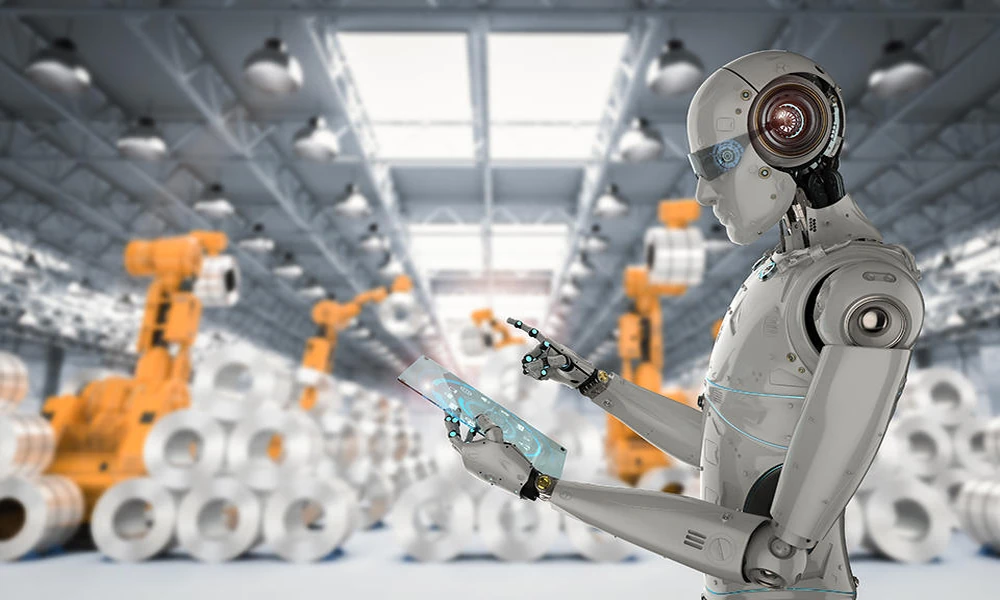
For years, artificial intelligence in manufacturing found its primary home in automated optical inspection. High-speed camera systems paired with convolutional neural networks offered a straightforward value proposition: identify surface defects, measure tolerances, and intercept non-conforming parts before they reached the shipping dock. While visual quality control delivered clear return on investment, focusing exclusively on defect detection treats artificial intelligence as a reactive filter rather than an operational lever.
Modern manufacturing operations generate vast streams of telemetry data from programmable logic controllers, vibration sensors, thermal imagers, and power meters. Capitalizing on this data requires moving upstream from defect detection into operational optimization. By applying machine learning models directly to process control, material orchestration, and asset health, industrial teams transform raw sensor output into actionable operational resilience.
Predictive Maintenance and Real-Time Asset Health
Traditional preventative maintenance relies on static schedules or cumulative runtime counters. Equipment receives service after a predetermined number of operating hours regardless of actual mechanical wear, leading to two distinct failure modes: premature replacement of functional components or unscheduled downtime when components fail ahead of schedule.
Predictive maintenance models shift this paradigm by evaluating multivariate time-series data from machine telemetry. Rather than tracking operating hours in isolation, deep learning architectures analyze subtle interactions between bearing vibration signatures, motor current draw, thermal dissipation, and lubricating fluid viscosity.
When an internal drive bearing begins to degrade, its physical response manifests long before structural failure occurs. High-frequency vibration analysis coupled with anomaly detection models can identify micro-fissures weeks before a temperature spike or audible noise emerges. This advance warning allows reliability engineers to schedule maintenance during planned changeovers, eliminating catastrophic mechanical breakdowns and preserving overall equipment effectiveness.
Adaptive Process Optimization and Autonomous Tuning
Manufacturing processes frequently contend with material variability, ambient environmental fluctuations, and tool wear. Human operators traditionally offset these variables through manual adjustments based on empirical rules of thumb or periodic lab testing. This trial-and-error approach introduces operator variability and often results in conservative, sub-optimal operating parameters.
Industrial artificial intelligence enables closed-loop process control by continuously analyzing sensor data and adjusting machine parameters in real time. In precision injection molding, for example, batch-to-batch variations in resin moisture or viscosity can alter fill characteristics. Neural networks trained on historical pressure curves and cavity temperature profiles can recalculate injection speed and holding pressure dynamically for every cycle.
Similar gains appear in thermal processing and chemical synthesis. Continuous process plants deploy reinforcement learning algorithms that balance energy consumption against yield purity. By continually mapping high-dimensional parameter spaces, these systems identify stable operating windows that human operators might never explore, maintaining tight product tolerances while reducing raw material consumption.
Dynamic Workcell Coordination and Material Flow
Intelligent automation extends well beyond stationary machinery into the physical movement of components across the plant floor. Modern manufacturing facilities depend heavily on autonomous mobile robots and articulated arms to maintain flexible production lines. Managing these assets requires sophisticated orchestration layer software that can adapt to changing production schedules and bottlenecks.
Intelligent fleet management platforms analyze real-time spatial data and equipment utilization to optimize transit routes and task allocations. When integrated into modern robotics applications, advanced algorithms dynamically re-route material transport vehicles away from congested aisles, match tool deployment to high-priority work orders, and adjust manipulator speeds to sync with variable line rates.
This level of responsive coordination prevents material starvation at downstream assembly stations without forcing plants to hold excessive work-in-process inventory. By shifting from rigid linear automation to adaptive workcell networks, facilities accommodate custom configurations and low-volume production runs without suffering severe throughput penalties.
Energy Management and Sustainability Tracking
Energy costs form a significant portion of operating expense in heavy manufacturing, yet energy management historically remained a passive accounting function. Facilities analyzed monthly utility bills retroactively rather than treating power consumption as a real-time process variable.
Machine learning models alter this dynamic by correlating power consumption data with specific production events and utility tariff structures. Energy optimization systems learn the thermodynamic profiles of industrial furnaces, compressed air networks, and chillers. By predicting thermal inertia and peak demand thresholds, these platforms adjust duty cycles, pre-cool cooling loops during off-peak hours, and modulate air compressor output to match immediate line demand.
Beyond direct cost reduction, granular energy monitoring supports scope 1 and scope 2 emissions tracking. Machine-level energy telemetry mapped against production outputs provides precise carbon intensity metrics per unit produced, allowing operations managers to identify energy-inefficient tooling and prioritize equipment overhauls based on verifiable sustainability data.
Generative Engineering and Production Planning
The intersection of artificial intelligence and manufacturing planning is transforming how products move from design to physical execution. In generative design, algorithms explore thousands of structural iterations based on defined mechanical loads, material constraints, and manufacturing methods. The resulting geometries often resemble organic structures, offering superior strength-to-weight ratios while minimizing material usage.
In production planning, constraint-satisfaction algorithms evaluate complex operational variables simultaneously. Scheduling a multi-product manufacturing line requires balancing tool availability, operator certifications, raw material arrival, customer delivery dates, and energy tariffs. Advanced optimization algorithms process thousands of potential scheduling combinations within seconds, identifying sequences that minimize tool changeover times and maximize overall throughput.
When unforeseen disruptions occur-such as a component delay or unexpected machine downtime-these systems recalculate schedules in real time. Production managers receive updated dispatch lists that mitigate down-line impacts, replacing manual scheduling spreadsheets with resilient, data-driven decisions. As industrial facilities continue integrating edge computing and advanced analytics, data transforms from a passive record of historical events into an active driver of operational agility.
